
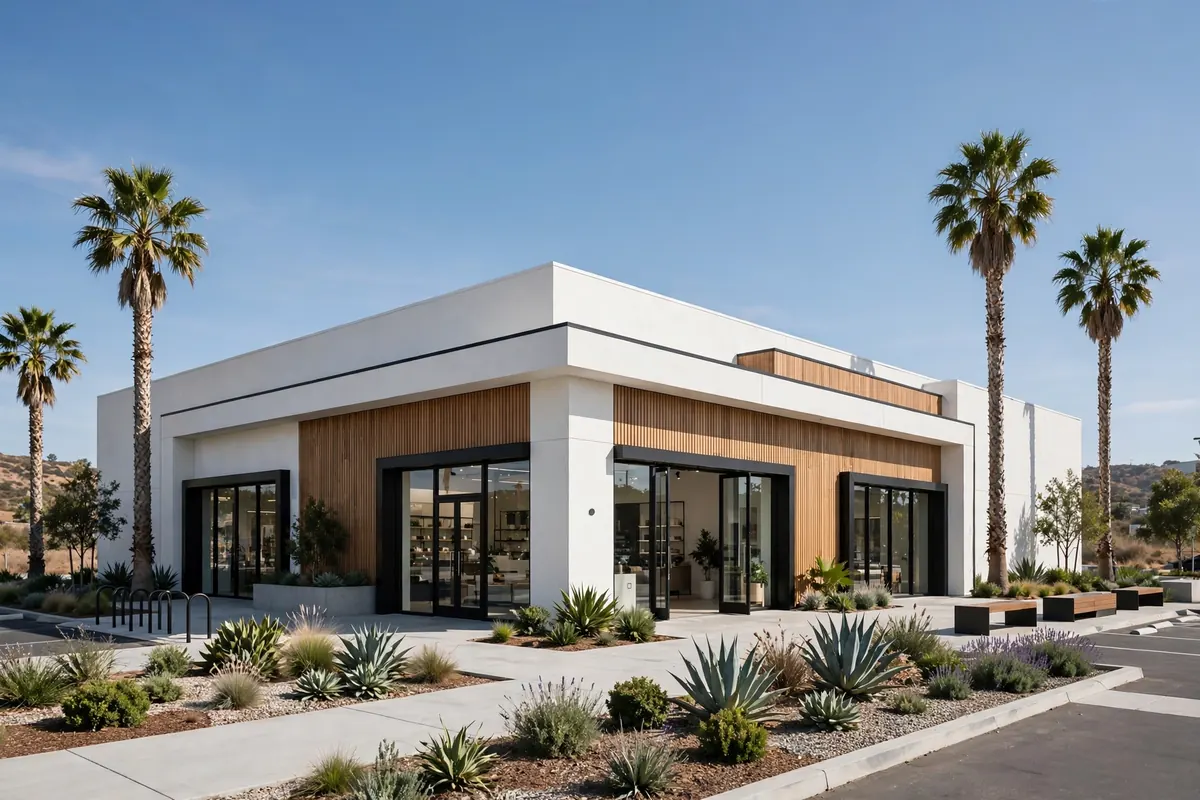
A hidden leak in a commercial building isn't just a water bill problem — it's downtime, tenant complaints, inventory risk, and liability. Commercial line testing brings the same acoustic, thermal, and camera methods to business premises, adapted for larger systems, off-hours access, and the documentation that facilities decisions require.
This page is for business properties: offices, retail, restaurants, warehouses, and light industrial. If you manage apartments or HOAs, our multi-family page addresses tenant coordination and unit-to-unit tracing specifically — different audience, different playbook.
Signs You May Need Commercial Line Testing
- Unexplained jump in the facility water bill
- Wet areas in slab, parking, or landscaping
- Restroom fixtures with recurring issues
- Water stains on drop ceilings
- Meter spinning with the building closed
- Mold or odors in mechanical spaces
Why Commercial Leaks Cost More Than Water
In a business, a leak's price includes everything around it: closed restrooms, disrupted operations, damaged inventory or tenant improvements, and the liability of a slip hazard or mold complaint. Detection that pinpoints the source in one visit — with documentation — is cheap compared to exploratory demolition in an occupied building. There is also the reputational cost: customers notice buckets in hallways and closed restrooms, and tenants remember which buildings are poorly maintained. A fast, documented investigation protects the property's reputation as well as its structure.
How Commercial Investigations Differ
Scale and access change the job. Commercial buildings have longer pipe runs, multiple zones, mechanical rooms, and often no as-builts to consult. We plan around your operations — early-morning or after-hours work when listening conditions are quietest and disruption is lowest — and we isolate zones systematically rather than wandering the building. Larger buildings may also have multiple water meters or submeters, which we use to our advantage — comparing zone-level usage isolates the search before instruments even come out. Where buildings have automation or leak-sensor alerts, we incorporate them as starting points rather than starting cold.
Methods at Commercial Scale
The toolkit is the same, applied bigger: acoustic listening along long corridor runs, thermal surveys of large ceiling areas, camera inspection of commercial drain lines (which see heavier use and more grease), and meter/pressure testing across zones. For irrigation and landscaping lines around commercial sites, the main-line approach applies.
Documentation for Decisions
Facilities work runs on paperwork. Every commercial investigation ends with a written report: what was tested, what was found, marked locations, and recommended next steps — suitable for work orders, capital planning, insurance files, and landlord-tenant records. For multi-site operators, consistent reporting across locations makes it possible to compare buildings and prioritize capital spending — the same format every time, so portfolio-level patterns become visible. No vague verbal reports.
Serving Perris Businesses
From retail along the commercial corridors to offices and restaurants across Perris, we work around your hours. Call to discuss the building, the symptoms, and the access constraints — we'll tell you honestly whether a detection visit is the right next step. A single undetected leak can also trigger compliance headaches — from health-department scrutiny in food service to mold liability in leased space — which is why documented, professional detection matters more here than anywhere.
Suspect a commercial line testing?
One visit confirms it and marks the exact position — before anyone digs.
☎ Call +1 951-508-0132Our Commercial Line Testing Process
Scope the building
We review the symptoms, building layout, and access constraints before scheduling.
Work off-hours
Early or late visits keep noise low for acoustic work and disruption near zero.
Zone and isolate
Systems are tested zone by zone to narrow the search across large footprints.
Pinpoint and report
Marked locations plus a written report suitable for work orders and files.